Burnout Isn't About Hours. It's About Pace.
May 12, 2026You took the long weekend. Slept in. Mostly stayed off email. Tuesday morning you sit down at your desk and you're already tired.
If burnout were about hours, that weekend should have fixed you. It didn't.
Here's what most productivity advice gets wrong: burnout isn't a math problem about your calendar. I've worked 20-hour weeks and felt fried. I've worked 80-hour weeks and felt fully alive doing some of the best work of my career. Same body. Same brain. Different operating conditions.
The variable isn't hours. It's pace. And pace is something most leaders have never actually measured.
Burnout Has Three Real Causes (None of Them Are Hours)
1. You're Operating Above Your Highest Sustainable Pace
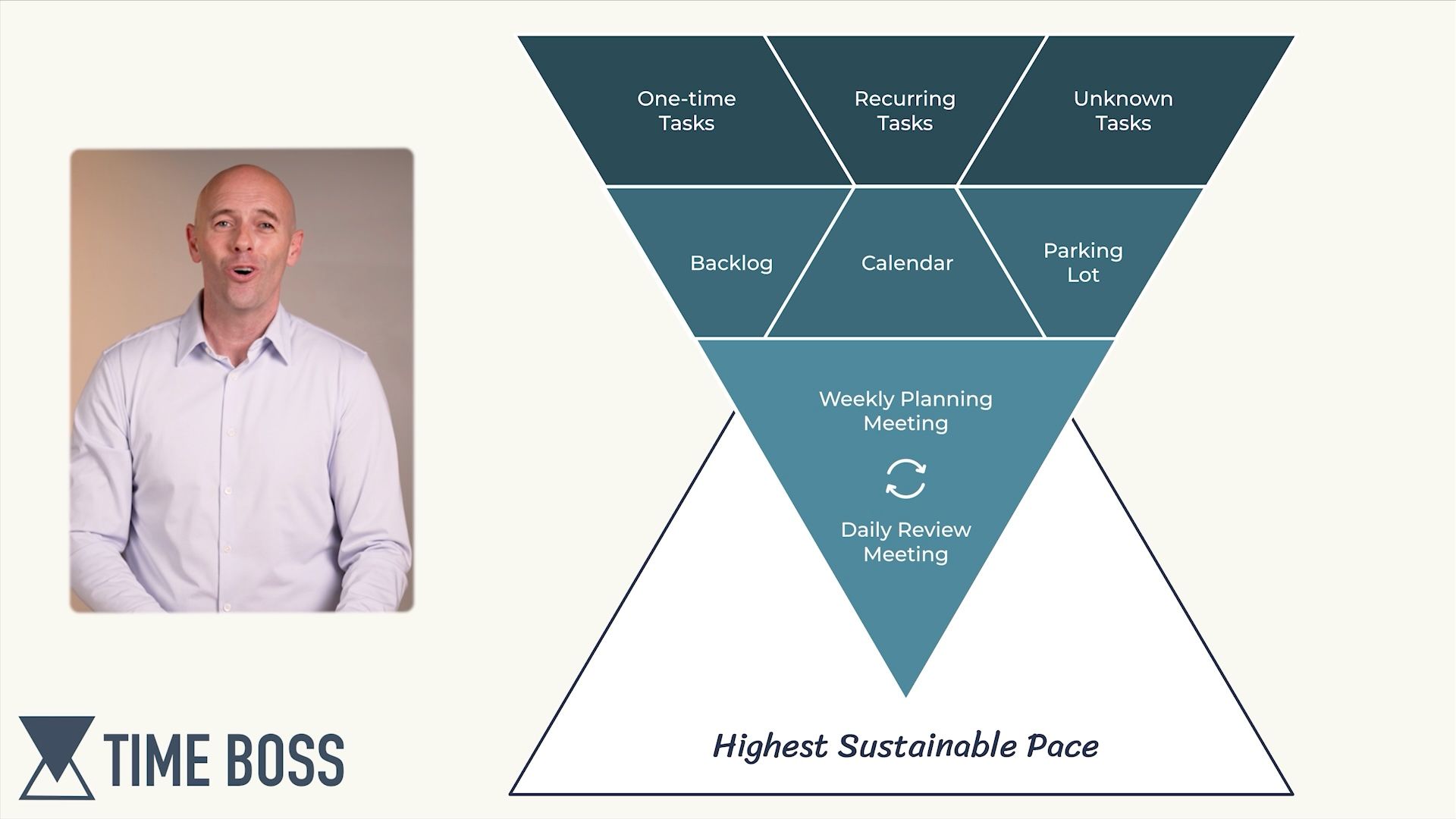
Every leader has a sustainable output. A speed they can run at week after week without their nervous system filing a complaint. We call this your Highest Sustainable Pace™.
Most people don't know theirs. They take on commitments based on what they wish were true, or what they pulled off in a sprint last quarter, and then they wonder why month three feels like drowning.
Operating above your Highest Sustainable Pace isn't heroic. It's a slow leak. You can do it for a week. You can probably fake it for a month. But the bill always comes due, and it always costs more than the work was worth.
The fix isn't to work less. It's to know your actual capacity, force rank your commitments against it, and trade in the ones that don't fit. (We call that time trading. It's a skill, and yes, you can learn it.)
2. You're Storing Your Work in Your Head
Your brain is an incredible processor. It's a terrible storage device.
When you carry every task, every deadline, every "I should follow up with..." around in your head, you pay a tax on every other thought. Researchers have a name for the residue: unfinished tasks keep firing in the background, eating the attention you needed for the thing in front of you.
That mental load isn't free. It's a major driver of the foggy, tapped-out feeling people confuse with burnout from overwork. You aren't working too much. You're carrying too much, unstored.
The fix is a commitment plan. Get everything out of your head and into a system you trust. Run a Weekly Planning Meeting with yourself, every week, non-negotiable, where you load the week, force rank it, and close the loops your brain has been holding open for free.
3. You're Treating PEACE Like a Reward Instead of a Requirement
Most leaders chase PROGRESS. They measure their week by what got done, what shipped, what moved.
But PROGRESS without PEACE is the express lane to burnout. PEACE isn't the prize you get when the work is finally finished. (Spoiler: it's never finished.) PEACE is the other half of the equation. It's what makes the PROGRESS sustainable.
At Time Boss we treat PEACE and PROGRESS as co-equal goals. Not because PEACE is the soft thing we say to round out the framework. Because if you optimize for one and ignore the other, you'll lose them both.
PEACE looks like a clear plan you trust, breaks that aren't stolen from your family, a Friday where the week is actually closed, a Sunday that doesn't get hijacked by anxiety about Monday. None of that is a luxury. It's infrastructure.
The Real Question
Stop asking "How do I work fewer hours?"
Start asking: Am I running at my Highest Sustainable Pace? Is my commitment plan trustworthy enough that I can put my brain down at the end of the day? Am I protecting PEACE the way I protect PROGRESS?
If the answer to any of those is no, that's where the leak is. The hours are just the symptom.
Burnout isn't inevitable. But it's also not going to be fixed by another long weekend.
If you want the operating system that makes all three of these stick, join us in the Masterclass, where we walk through the full Time Boss framework so you can build a week that creates both PROGRESS and PEACE.
Master Your Time with the Time Boss Newsletter
Practical tips, helpful guides and more delivered bi-weekly.