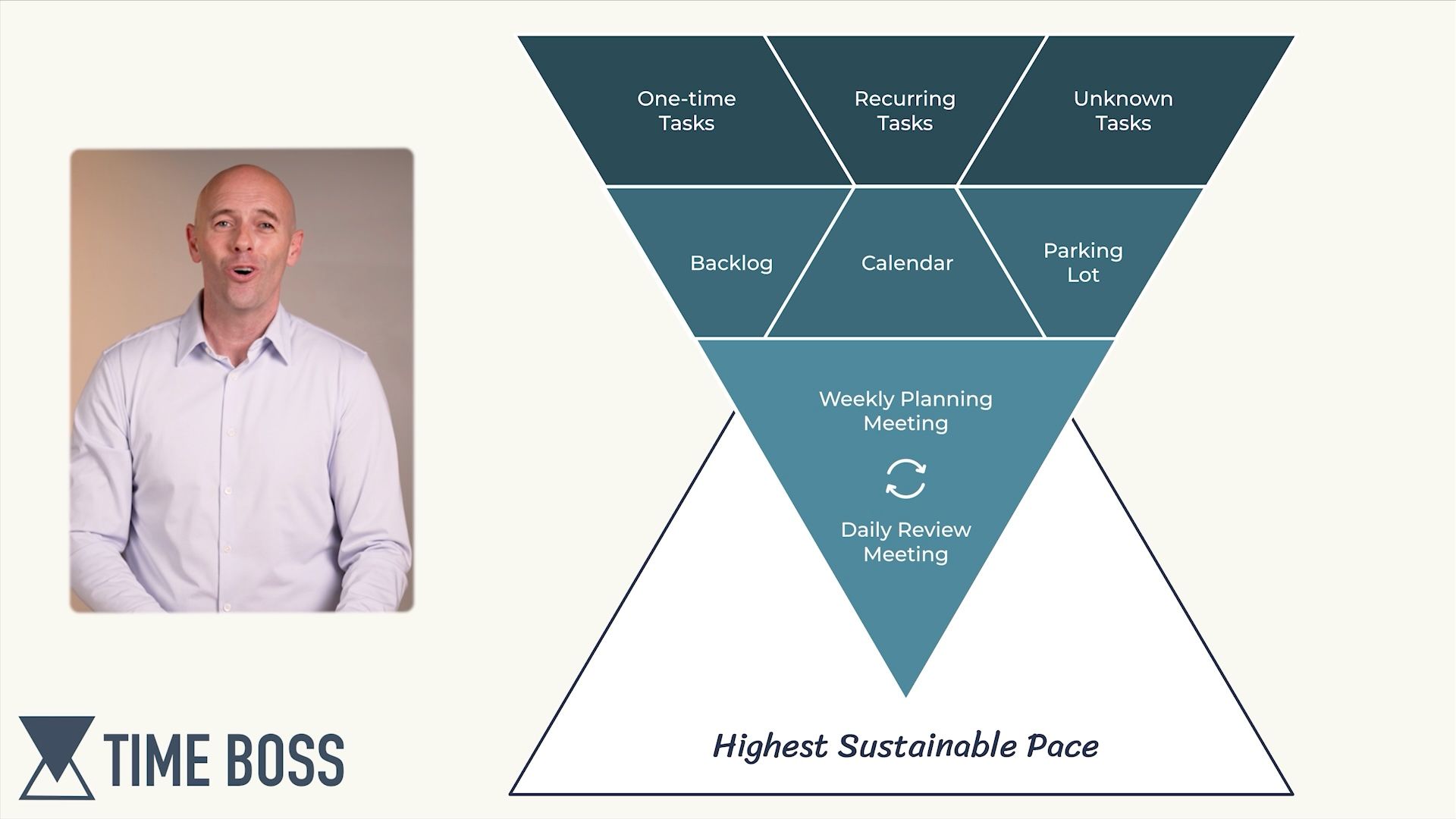
Why Is My Team Overwhelmed?
Mar 30, 2026It's 8:37pm and your best project manager is still working.
She's home, at least physically, but she's been emotionally at work since 6:02 this morning.
Between drop-ins, emails and messages, she felt like a short order cook all day long, reacting to the demands coming at her from the team and from clients. All important items, how could she say "no"? Every second of the day she was working on the most rational thing, yet now as she sits there it's hard to remember what she actually got done.
Coming home at the end of the day, she stood in front of her garage door and took a deep breath, trying to shake the stress off and muster up energy to be the parent, or spouse, or friend she wishes she could be. She played with her kids, tried to be present in conversations, but in the back of her mind she was feeling the weight of unanswered messages, of projects slipping behind, of a team member underperforming in need of a plan to fix it.
After making effort long enough with family, she retreated to her laptop to finally make her real priorities happen now that it's "quiet." She'll work till 11:47pm, later than she wanted to, slamming her laptop shut as she can barely think straight. She'll wake up at 5:45am, and before her feet hit the ground she's checking messages because she already feels behind.
She'll tell herself "it's just a season," though she's been saying that for the past 6 months.
You Want Your Team to Have Work/Life Balance
You care about your people. You want them to have work-life balance. You've told them this repeatedly. So why do they keep ending up overwhelmed?
Your team isn't overwhelmed because they're lazy. In fact, they are probably working harder than she ever has in her life.
Your team isn't overwhelmed because of an intelligence issue. They know what needs to happen and are able to make it happen.
Your team is incredibly capable, and is still overwhelmed, for one very simple reason...
They care.
Your Team is Overwhelmed Because They Care
Your team's to-do list is made up of projects and tasks they've said "yes" to because they care.
Specifically, they care about two things:
- They care about results because results get them the outcomes they want: compensation increase, promotion, long term goals.
- They care about relationships because they care how they show up to people, and they want to rise to the expectations others have of them.
There's no problem with saying "yes" to things that drive results, or saying "yes" to things that support relationships they care about.
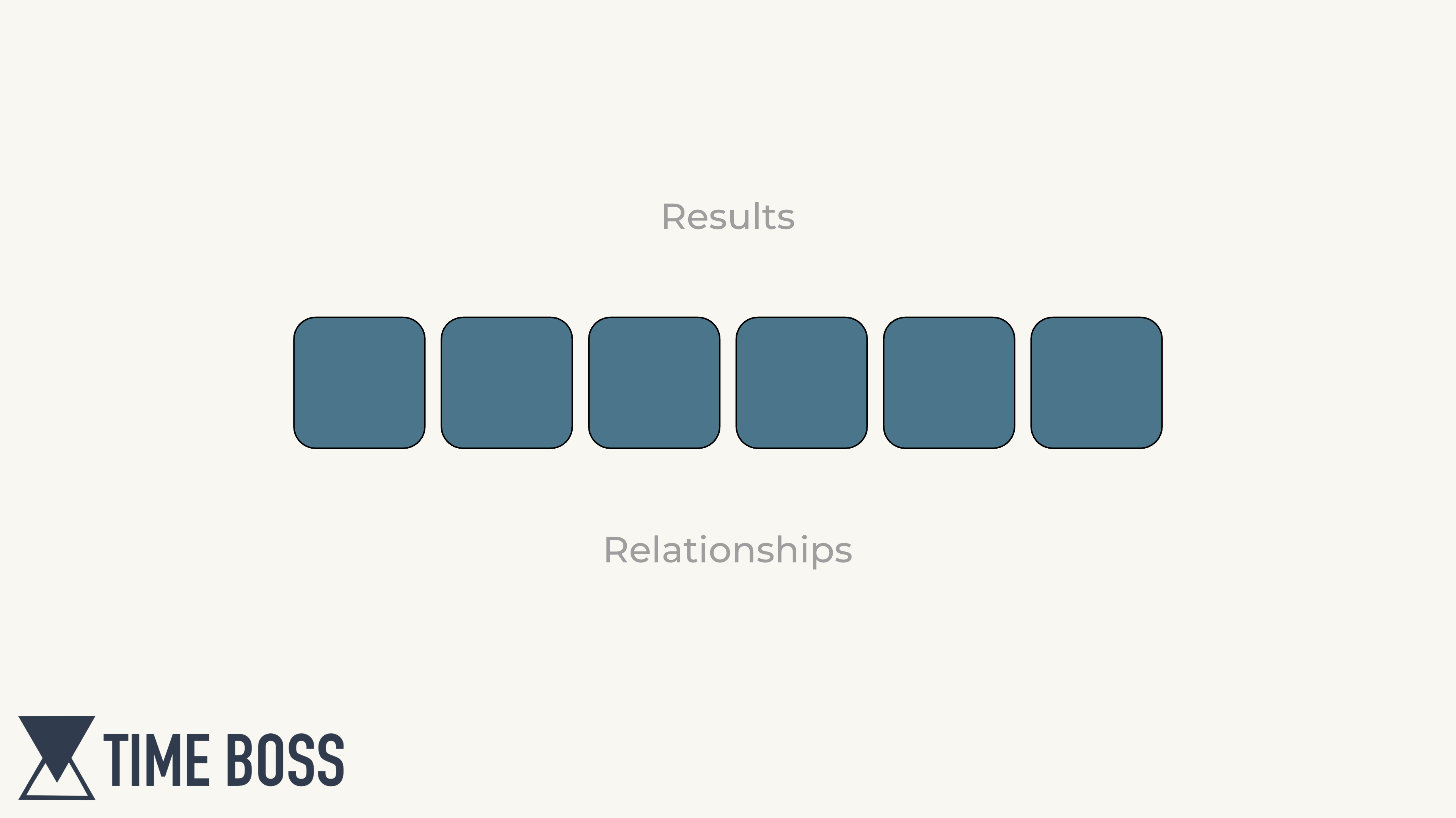
The problem is the average knowledge worker overestimates what they can get done in a day by more than 20%.
This wouldn't be an issue if your team dealt with the facts. The facts are there is only so much time, and they only have so much capacity. If they dealt with the facts, they could shut their laptop, go home for the day, rest and relax, and come back tomorrow recharged and ready to do great work again.
But they don't deal with the facts. They deal with the story they tell themselves about the facts. And the story is brutal:
- "Oh shoot, what if that person finds out I didn't do what they asked me?"
- "Oh man, what if not doing that task comes back to hurt me or someone I care about?"
- "Ug, I'm not keeping up. Maybe I don't have what it takes."
Dealing with the story instead of the facts produces a familiar feeling: stress.
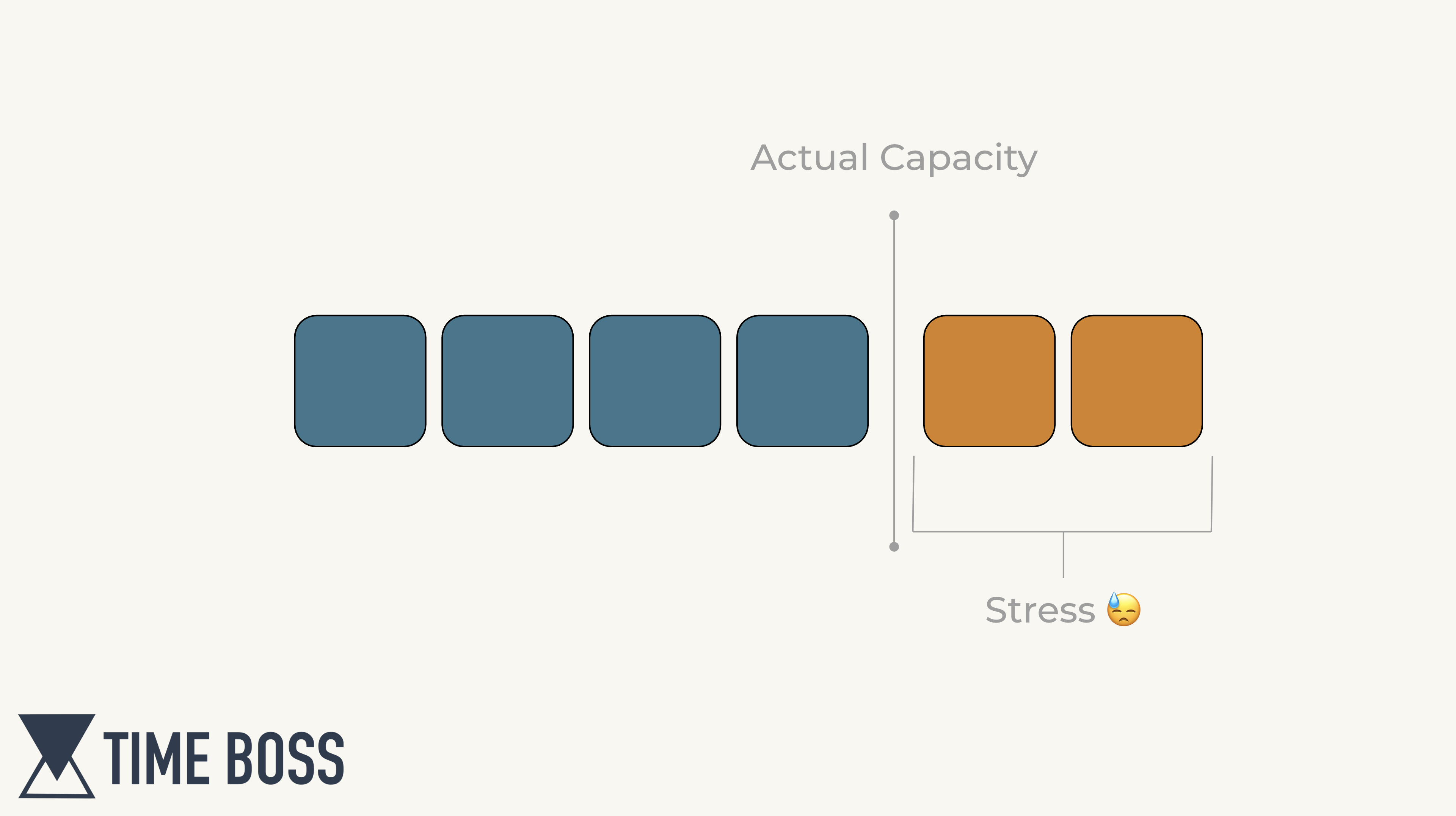
Your team is now aware that they have more to do than time to do it, and they care deeply about the items they're not getting done. The brain interprets this situation as danger. It's afraid that if they don't keep working, it's going to hurt them or someone they care about, so pushes stress to motivate action. It's self-protection gone haywire, and a fight-or-flight response.
So your team members fight, because they care. They work later than they want to. They open their laptop after dinner. They skip their workout because they feel "behind." They work through lunch to "catch up".
They can do this for a season, but eventually their body rebels and demands a break. They swing from fight to flight. They haven't solved for the overwhelm, but they just need to get out of their heads for a little bit, choosing their drug of choice like ice cream, Instagram or alcohol (maybe all three). They know they aren't solving the problem, but they just need a break.
This is when this becomes a business problem.
Ongoing Overwhelm is Hurting Their Results (and Them)
When your team doesn't solve the problem, they take the items they didn't get to today and shove them into tomorrow, starting the day "behind."
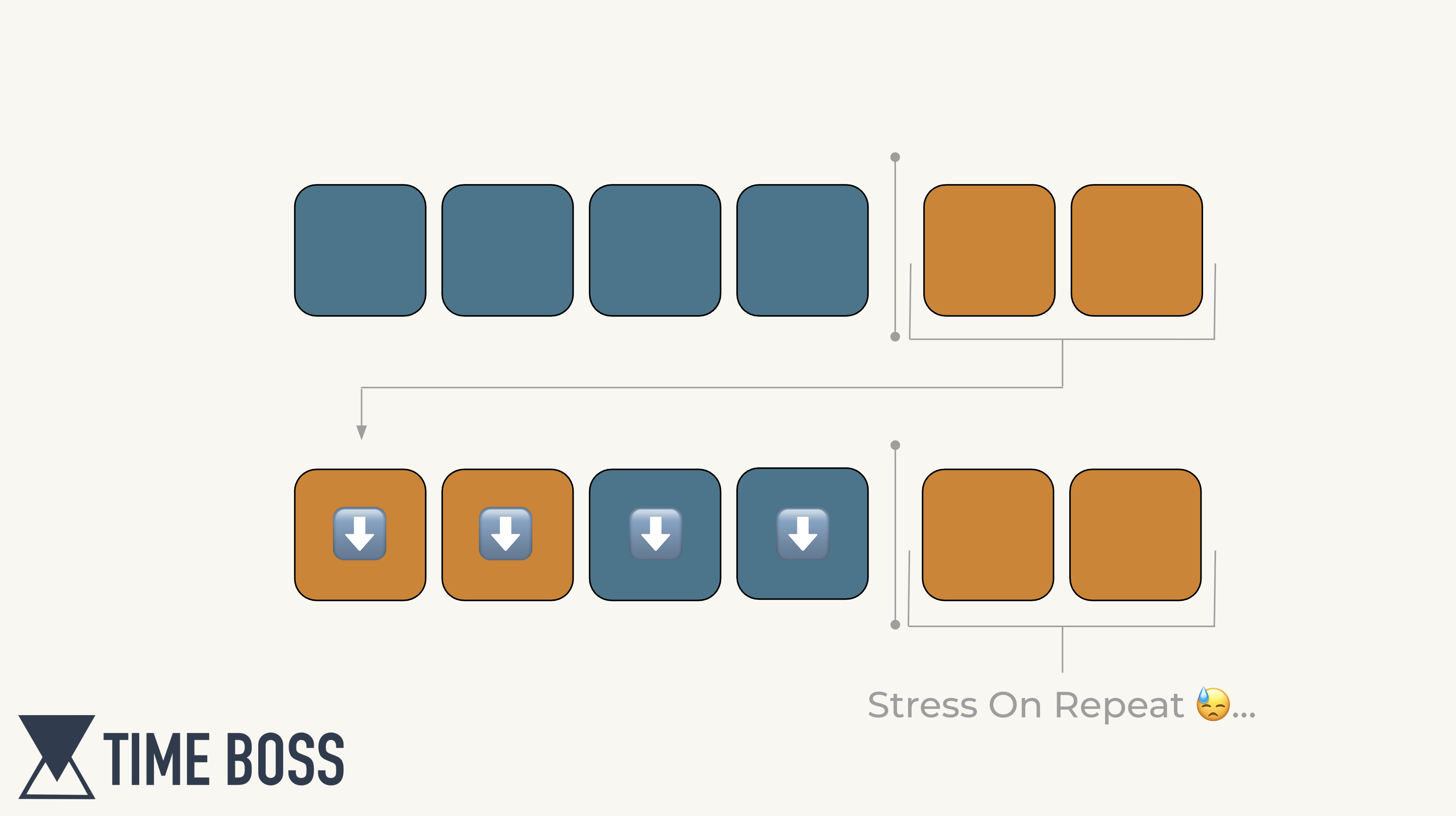
Having more to do than time to do it puts them in a place of cognitive overload. And this is where it becomes your problem.
When your people are cognitively overloaded, it changes the way they make decisions and makes them perform more poorly on whatever they're focused on.
- They are less creative and less likely to seek best practice, because they don't believe they have time to do so.
- They are less collaborative, because collaborating takes time, and that's a luxury they don't believe they have.
- They stop delegating, because it's either too late to delegate, or last time they delegated the person did a terrible job and they say crazy things to themselves like "if I want something done right I need to do it myself."
The items they actually work on, they perform poorer on. And since they didn't solve the problem, they end the day with undone work, producing more stress.
It's literally a stress hamster wheel, and they don't know how to get off.
Your team's overwhelm is hurting their results, and they are stuck with an experience of life they don't want, marked by stress, fear and anxiety.
This is the day to day experience of your team. To really understand the impact on your team and your business, you have to zoom out. Days turn into weeks turn into months, with results suppressed by overwhelm, and team members you care about living with stress, fear and anxiety.
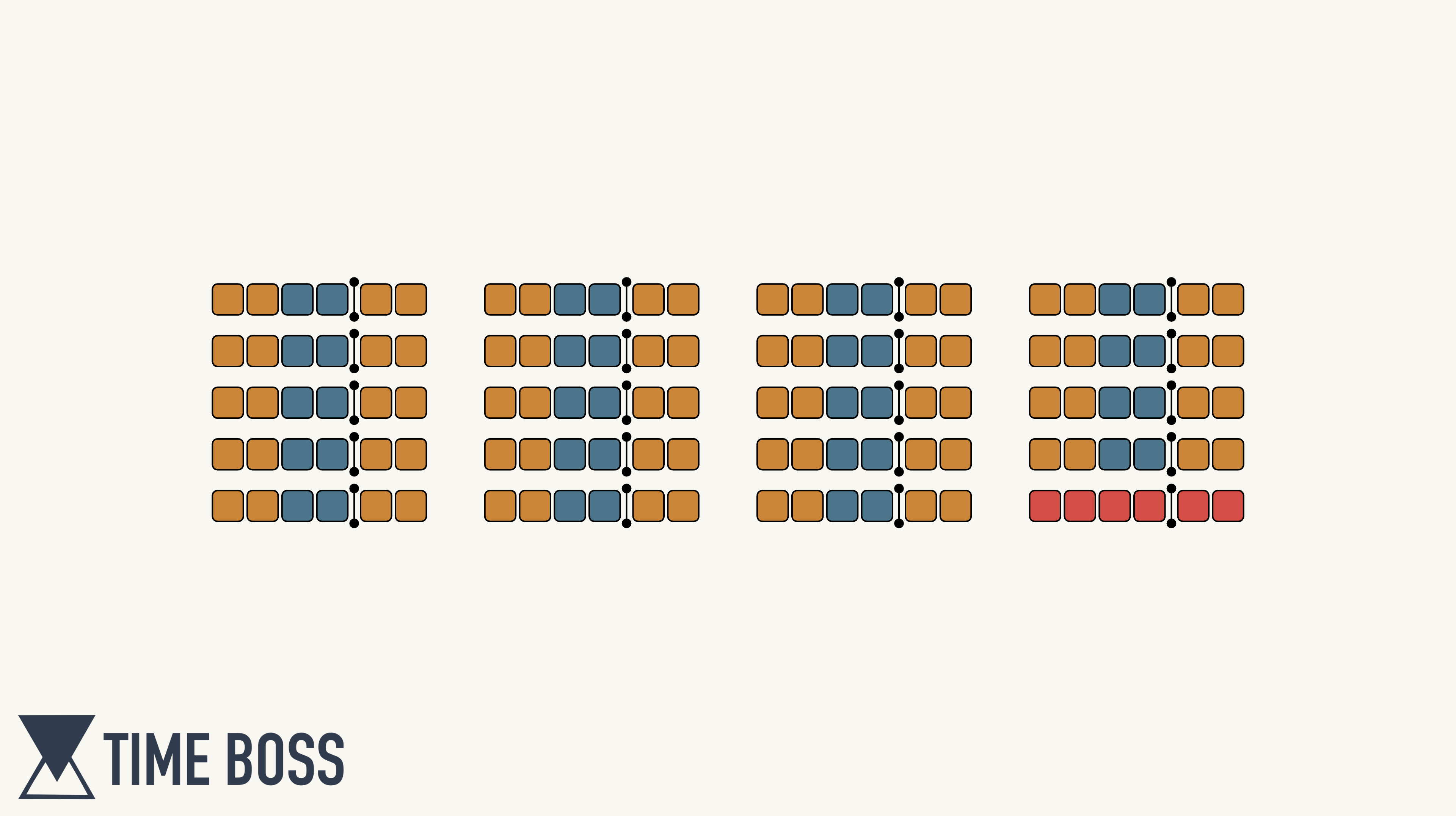
Picture this across your whole team. These are the people you are counting on to grow this company from where it is to where you want it to go. If they're already maxed out, already making worse decisions, already failing to delegate and collaborate, you don't just have a people problem, you have a ceiling.
You need these people operating at their best. For their sake because you care about them, and for your sake, because your growth depends on it.
Peace + Progress is Possible for Your Team
Time Boss helps your team maximize their impact while protecting them from burnout. It gives them a framework to get incredible results with an experience of work and life that they actually want, so they show up recharged, making better decisions, and ready to help you grow.
If you want to see it in action, check out the free 75-minute Time Boss Masterclass. It will show you the full recipe that is helping teams experience more peace (97% of participants experience more peace and less overwhelm) and get more progress (team members report 30%+ productivity gains, and 4+ hours back in their schedule a week PER TEAM MEMBER).
If you want to see how Time Boss can help your team, schedule a 60-minute intro coaching call. During this time we'll learn about your unique situation, see how the Time Boss framework would map to your company, and review how we might work together to help you achieve your goals.
You care about your team. You want them to succeed. And you need them operating at their best to grow your company. Their overwhelm is not serving them, and it's not serving you. Time Boss was created to help you solve this problem.
Master Your Time with the Time Boss Newsletter
Practical tips, helpful guides and more delivered bi-weekly.